
How Old Pipes Affect Your Home’s Value
When homeowners think about increasing property value, they often focus on kitchen remodels, landscaping, fresh paint, or…
Hours:24/7 emergency service

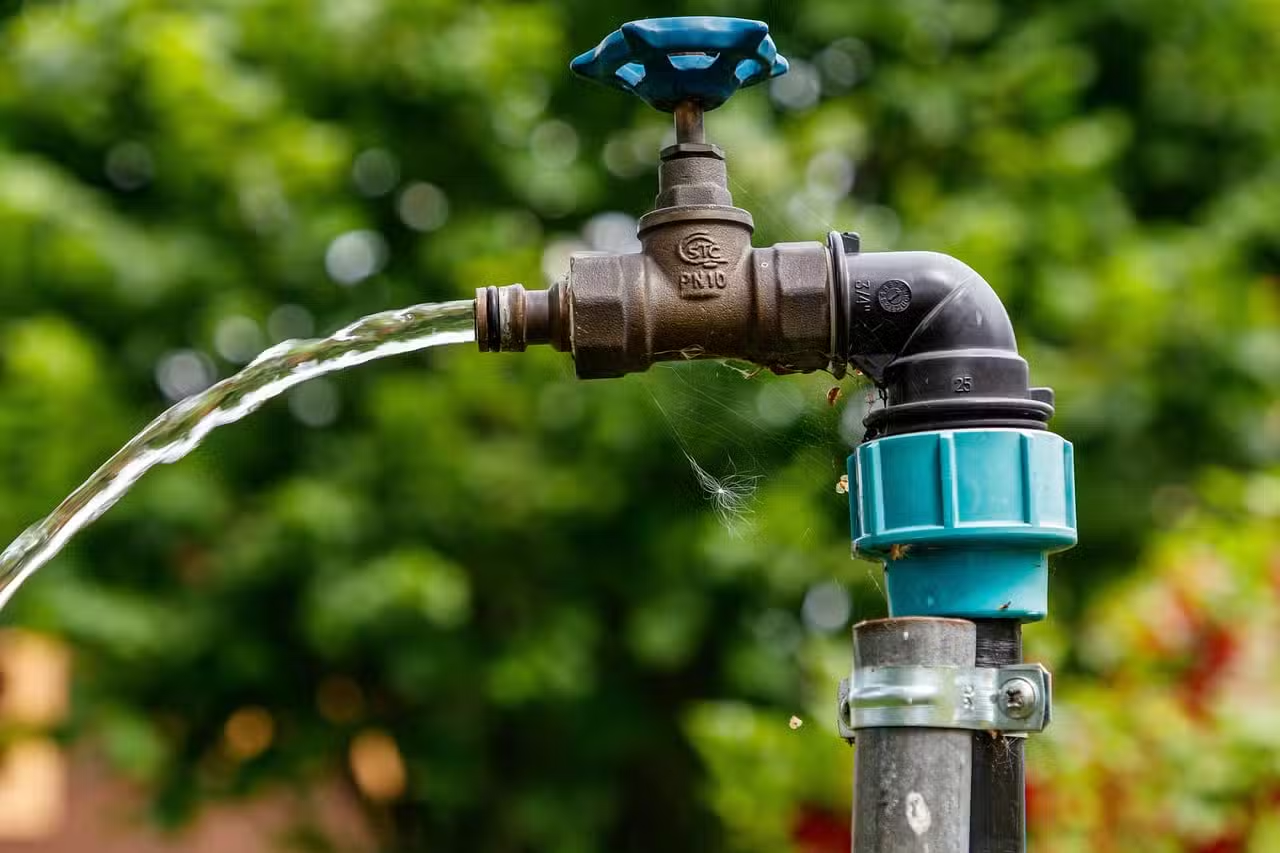


There is a quiet battle happening beneath the surface of millions of yards across the country. On one side: the sewer line running from your home to the municipal main, a pipe that handles everything you flush, drain, and rinse away every single day. On the other side: the root systems of the trees and shrubs on your property, some of which have been growing—and seeking—for decades.
It’s a battle that tree roots win more often than homeowners expect. And when they do, the results range from slow, frustrating drains to full sewage backups inside the home—events that are expensive, messy, and in some cases structurally damaging to the property.
The especially frustrating part? Root intrusion into sewer lines almost always starts years before any visible symptom appears. By the time a homeowner notices something is wrong, the roots may have already caused significant damage inside the pipe. The good news is that with the right knowledge and the right professional partner, you can identify the problem early, address it effectively, and prevent it from ever becoming an emergency.
This guide covers everything homeowners need to understand about tree root intrusion: how it starts, how it progresses, how to spot it, and what your options are when you find it. Because in the contest between roots and your sewer line, early action is the only reliable way to come out ahead.
How Tree Roots Find and Enter Your Sewer Line
To understand root intrusion, you first have to understand what roots are looking for. Tree roots grow toward sources of water, oxygen, and nutrients. Your sewer line—carrying warm, nutrient-rich wastewater through the soil—is essentially a beacon. Even a hairline crack in a pipe joint or a slightly loose connection emits a small plume of moisture and vapor into the surrounding soil. Roots detect that signal and grow toward it with remarkable precision.
Once a root tip finds an opening—even one measured in millimeters—it enters the pipe. Inside, it encounters everything it needs to thrive: water, warmth, and a rich supply of organic material. The root grows rapidly in this ideal environment, branching and expanding. Over months and years, what began as a thread-thin tendril becomes a dense mass of root material that can partially or completely block the pipe.
As the root mass grows, it also exerts physical pressure on the pipe walls. This is where structural damage compounds the blockage problem. Roots can crack older clay or cast iron pipes, shift pipe alignment, and in severe cases cause complete pipe collapse. At that point, the issue moves beyond a cleaning job and into full repair or replacement territory.
Which Trees Are the Biggest Offenders?
While any tree or large shrub can contribute to root intrusion, some species are far more aggressive than others. The trees most commonly associated with sewer line damage include:
That said, even ornamental shrubs, hedgerows, and smaller trees planted directly above or adjacent to a sewer line can cause problems over time. The distance between a tree and your sewer line matters—but roots routinely travel 20 to 30 feet or more from the base of the tree, and the largest species can extend their root systems much farther than that.
The Three Stages of Root Intrusion—and Why Early Detection Matters
Root intrusion doesn’t happen overnight. It progresses in stages, and the cost and complexity of remediation increases significantly with each one. Understanding those stages helps you appreciate why early detection is so valuable.
Stage 1: Initial Entry and Minor Intrusion
In the earliest stage, fine root tendrils have entered the pipe through small cracks or loose joints but haven’t yet formed a significant mass. Water flow is minimally affected, and there are typically no symptoms at all. A homeowner would have no reason to suspect a problem. This is the ideal stage at which to catch root intrusion—when it can be cleared quickly, cheaply, and without any structural repair to the pipe.
Stage 2: Moderate Growth and Reduced Flow
As root growth inside the pipe continues, the accumulated mass begins to catch debris—toilet paper, grease, food particles—creating a partial blockage. Drains throughout the home start to slow. Toilets may flush sluggishly. You may notice gurgling sounds from drains. This is the stage at which most homeowners first become aware that something is wrong, though many attribute the symptoms to a simple clog rather than root intrusion. Clearing the blockage at this stage is still a relatively routine procedure, but the pipe likely has existing cracks or gaps that allowed the roots in and will need to be assessed.
Stage 3: Severe Blockage and Structural Damage
In the advanced stage, root masses have grown large enough to cause significant or complete blockage of the pipe. Sewage may begin backing up into the home through floor drains, toilets, or tub drains. The roots have exerted enough pressure to crack, shift, or collapse sections of the pipe. At this point, clearing the blockage is only the beginning—structural repair or full sewer line replacement may be necessary, and the cost increases dramatically. Emergency service calls, excavation, and pipe replacement can run anywhere from $3,000 to $15,000 or more depending on the extent of damage and the length of pipe affected.
Warning Signs That Roots May Be in Your Sewer Line
Because root intrusion progresses slowly and silently, many homeowners miss the early signals. Here are the warning signs to watch for—and take seriously:
Slow Drains Throughout the Home
A single slow drain is often a localized clog. But when multiple drains throughout the house are running slowly at the same time—sinks, tubs, showers, and toilets—it points to a problem in the main sewer line rather than an individual fixture. Root intrusion is one of the most common causes of this pattern.
Gurgling Sounds from Drains or Toilets
Gurgling or bubbling sounds after flushing a toilet or running water down a drain indicate that air is trapped in the sewer line—typically because something is partially obstructing the pipe. Roots catching debris and creating a partial blockage is a classic cause of this symptom. If you hear gurgling from a floor drain when you flush a toilet across the house, take it seriously.
Sewage Odors Inside or Outside the Home
Sewer gas has a distinctive sulfurous odor that should never be present inside a home under normal circumstances. If you notice sewer smells in your yard, near your foundation, or inside the house—particularly in bathrooms or near floor drains—it can indicate that sewer gas is escaping through damaged sections of pipe or through a compromised sewer line. Root intrusion can create gaps in pipe joints through which gas escapes even before a visible blockage develops.
Unusually Lush or Green Patches in the Yard
If you notice a strip of particularly green, lush, or fast-growing grass running across your yard—especially in a roughly straight line that corresponds with the path of your sewer line—that vegetation is being fed by nutrients leaking from a compromised pipe. It’s one of the most reliable visual indicators of a sewer line issue and should prompt an immediate professional inspection.
Recurring Drain Clogs
If you’ve had the same drain line cleared multiple times in the past few years and the problem keeps coming back, that’s a strong indication that the root cause—no pun intended—has not been addressed. Snaking a drain removes the root mass that has accumulated, but it doesn’t repair the cracks or gaps that allowed roots to enter. Without treating the pipe itself, roots will simply regrow and return.
Sewage Backups
This is the most urgent and unmistakable warning sign. If sewage is backing up into your home through floor drains, bathtubs, or toilets—especially on the lowest level of the house—you have a significant blockage in your main sewer line that requires immediate professional attention. Do not use any water in the home until the line has been cleared. Every flush and drain cycle adds to the backup.
How Professionals Diagnose Root Intrusion
If you’re experiencing any of the warning signs above, the next step is a professional sewer line inspection. Modern diagnostic tools have made it possible to assess the condition of your sewer line with remarkable accuracy and minimal disruption to your property.
Sewer Camera Inspection
A sewer camera inspection—also called a video pipe inspection—is the gold standard for sewer line diagnosis. A flexible cable with a high-definition camera at the tip is inserted into the sewer line through a cleanout access point. The camera transmits live video as it travels through the pipe, allowing the technician to see exactly what’s inside: root masses, cracks, pipe misalignment, grease buildup, and any other obstructions. The footage is recorded and reviewed, giving you a clear, documented picture of your pipe’s condition. There is no excavation, no guesswork, and no disruption to your yard.
Pipe Locating and Depth Mapping
Many camera systems include a locating transmitter that allows the technician to pinpoint exactly where in the yard specific sections of pipe are located—and how deep they run. This information is invaluable if excavation or spot repair is needed, as it minimizes the amount of digging required and ensures that repair work targets the right location.
Treatment Options: From Cleaning to Full Replacement
Once root intrusion has been confirmed, the appropriate treatment depends on the severity of the growth and the condition of the pipe. Here is a breakdown of the most common approaches:
Hydro-Jetting
Hydro-jetting uses highly pressurized water—typically delivered at 3,000 to 4,000 PSI—to blast root masses, grease, and debris from the interior walls of the pipe. Unlike traditional drain snaking, which cuts through roots but leaves residue behind, hydro-jetting clears the pipe thoroughly, leaving the interior walls nearly as clean as new. It is the most effective clearing method for moderate root intrusion and is often used as a preparatory step before camera inspection or pipe lining.
Mechanical Root Cutting
For heavier root masses, a mechanical root cutter—a rotating cutting head attached to a drain snake—can be used to physically shred and remove root growth from inside the pipe. This method is highly effective at restoring flow quickly and is commonly used as an emergency response to backups. However, like snaking, it addresses the blockage without sealing the entry points, so follow-up repair is recommended to prevent regrowth.
Trenchless Pipe Lining (CIPP)
Cured-in-place pipe lining, or CIPP, is one of the most significant advances in sewer repair technology of the past two decades. A flexible liner saturated with epoxy resin is inserted into the damaged pipe and inflated against the pipe walls, then cured in place using heat or UV light. The result is a new pipe-within-a-pipe—smooth, seamless, and impervious to root intrusion—that seals all existing cracks and joints without any excavation. CIPP lining is ideal for pipes with moderate cracking and root entry points where the overall structural integrity of the pipe is still intact. It is typically less expensive than full excavation and replacement and involves minimal disruption to your yard, driveway, or landscaping.
Pipe Bursting
When a pipe is too damaged for lining—severely collapsed, completely offset, or structurally compromised beyond repair—pipe bursting offers a trenchless alternative to full excavation replacement. A bursting head is pulled through the old pipe, shattering it outward into the surrounding soil while simultaneously pulling a new pipe into place behind it. The result is a fully replaced sewer line with only two small access pits required rather than a trench running the full length of the pipe.
Traditional Excavation and Replacement
In cases where a pipe has collapsed, severely offset, or is too deteriorated for trenchless methods, traditional excavation may be the only option. The damaged section of pipe is dug up and replaced with new material. While more disruptive and generally more expensive than trenchless options, it is sometimes the most appropriate solution—and in those cases, it is the most reliable long-term fix available.
Prevention: How to Protect Your Sewer Line from Root Intrusion
The best approach to root intrusion is one that prevents it from gaining a foothold in the first place. Here are the most effective prevention strategies for homeowners:
Prevention is exponentially cheaper than remediation. A routine inspection costs a fraction of what an emergency backup and repair will cost—and it gives you the information you need to make smart decisions about your property before a crisis forces your hand.
Don’t Let Roots Write the End of Your Sewer Line’s Story. Call Pacific Rooter.
Root intrusion is one of the most common—and most preventable—sewer line problems homeowners face. But it only stays preventable if you act before the damage becomes severe. The homeowners who call us for a routine inspection save a fraction of what those who call us for an emergency repair end up spending.
At Pacific Rooter, we’ve seen root intrusion at every stage—from the earliest tendrils caught on a camera inspection to fully collapsed lines that required complete replacement. We have the equipment, the expertise, and the honesty to tell you exactly where things stand and what your best options are, whether that’s a hydro-jet cleaning, a trenchless pipe lining, or a more involved repair.
We specialize in sewer line inspection, root removal, hydro-jetting, trenchless pipe lining, pipe bursting, and full sewer line replacement. We serve homeowners throughout the area with upfront pricing, no-surprise estimates, and work that’s done right the first time.
Your sewer line runs beneath everything. Make sure it’s protected.
📞 Call Pacific Rooter today to schedule your sewer line inspection or get a free estimate on repairs.
🗓️ Book your appointment online and get a clear picture of your sewer line’s condition before a small problem becomes a big one.
Pacific Rooter — clearing the way for homeowners, one pipe at a time.


When homeowners think about increasing property value, they often focus on kitchen remodels, landscaping, fresh paint, or…
Clogged drains are one of the most common plumbing issues homeowners face. At first, t…
Clogged pipes are one of the most frustrating plumbing problems homeowners face. A slow-draining sink, a…
Expert plumbing solutions backed by 20+ years of experience. Call anytime, we’re ready 24/7 to get the job done right.




 60+ reviews