
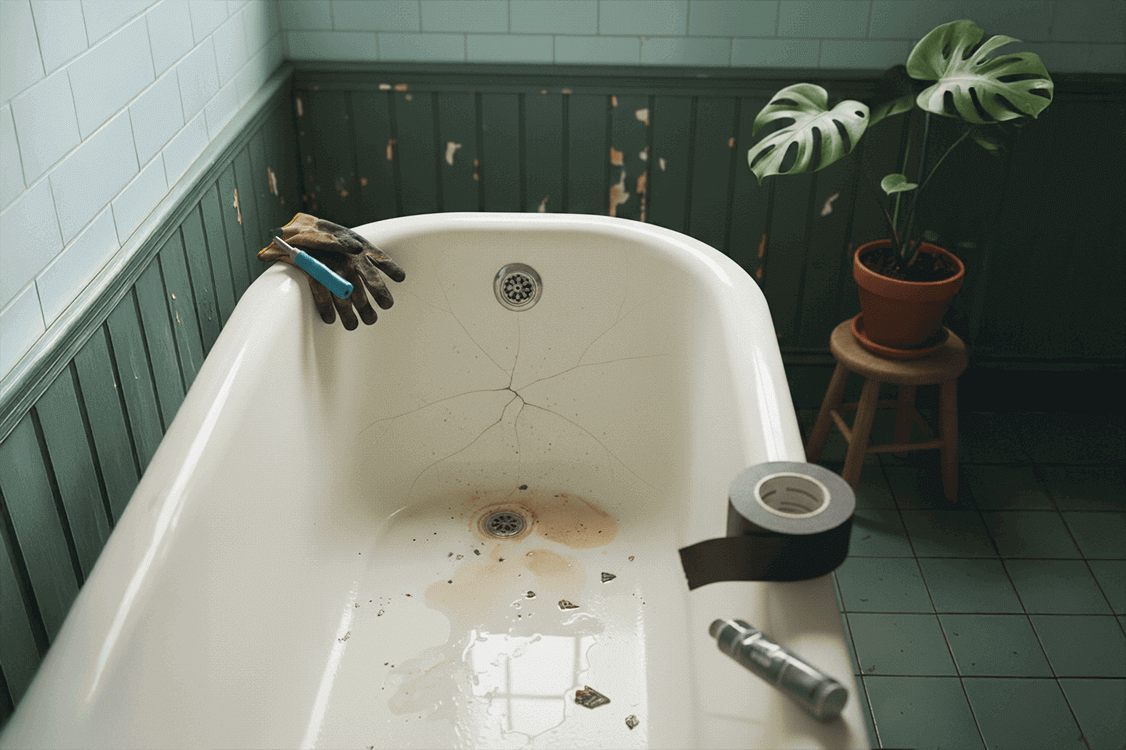
A cracked bathtub is more than just an eyesore—it can lead to water damage, mold growth, and costly repairs if ignored. The right solution depends on the size of the crack and the type of bathtub you have. Below, we’ll walk through how to fix a cracked bathtub and when it’s best to call a professional plumber.
Why Bathtub Cracks Are More Serious Than They Look
Even small cracks can allow water to seep beneath the tub, damaging subflooring, drywall, and nearby plumbing. Over time, hidden moisture can lead to mold, mildew, and rot—issues that often go unnoticed until repairs become extensive and costly.
Identify the Type and Severity of the Crack
Before starting any repair, inspect the crack closely. Hairline cracks in fiberglass or acrylic tubs are often repairable with a DIY kit. Larger cracks, soft spots, or leaks underneath the tub usually indicate structural damage and may require professional repair or replacement.
Clean and Dry the Damaged Area
Thoroughly clean the area around the crack using a non-abrasive cleaner. Remove soap residue, grime, and any loose material. Dry the surface completely, as moisture can prevent repair materials from bonding properly.
Use a Bathtub Repair Kit for Small Cracks
For minor cracks, a bathtub repair kit is often the most effective solution. These kits typically include epoxy or filler, hardener, and finishing materials. Follow the manufacturer’s instructions carefully, apply the filler evenly over the crack, and allow it to cure fully before sanding and refinishing.
Sand and Refinish the Surface
Once the repair compound has hardened, gently sand the area until it’s smooth and flush with the tub surface. Apply the finishing or glaze included in the kit to restore the tub’s appearance and protect the repair.
Avoid Using the Tub Until Fully Cured
Most repair materials require at least 24 hours to cure. Avoid running water or using the bathtub during this time to ensure the repair sets correctly and lasts longer.
When a Cracked Bathtub Needs Professional Help
If the crack is wide, growing, or causing leaks beneath the tub, DIY repairs may only be a temporary fix. Structural damage, cast iron tub cracks, or repeated cracking usually require professional assessment. In many cases, replacement or professional resurfacing is the safest option.
Signs You Need Professional Bathtub Repair
If you notice any of the following, it’s best to contact a professional plumber instead of attempting a DIY fix:
- Water leaking under the tub or into nearby rooms
- Soft or spongy areas around the crack, indicating structural damage
- Cracks longer than a few inches or cracks that continue to spread
- Discoloration, staining, or mold near the bathtub base
- Recurring cracks after previous repairs
- Visible damage to pipes or fittings beneath the tub
These signs often indicate deeper issues that surface-level patch kits cannot fix.
Call a Professional Plumber for Bathtub Repair
Pacific Rooter provides expert plumbing and bathtub repair services throughout Orange County. If you’re unsure how to fix a cracked bathtub or want a long-term solution, our experienced team can evaluate the damage and recommend the best repair option.